

Approximately 5 billion people watched the World Cup in 2022, with approximately 1.5 billion global viewers turning into the final. Throughout the tournament, attention spiked in the US between 8 million and 20 million viewers, placing World Cup matches in the same mass-reach category as NBA Finals and Major NFL regular-season games.
The World Cup presents a massive opportunity for marketers to engage soccer fans. But reaching them isn’t about the matches themselves. It’s about showing up in the moments surrounding them, across channels and devices. In this blog post, we’ll explore how to capture those moments to make the most of this year’s biggest, global phenomenon.
The name of the game is always on
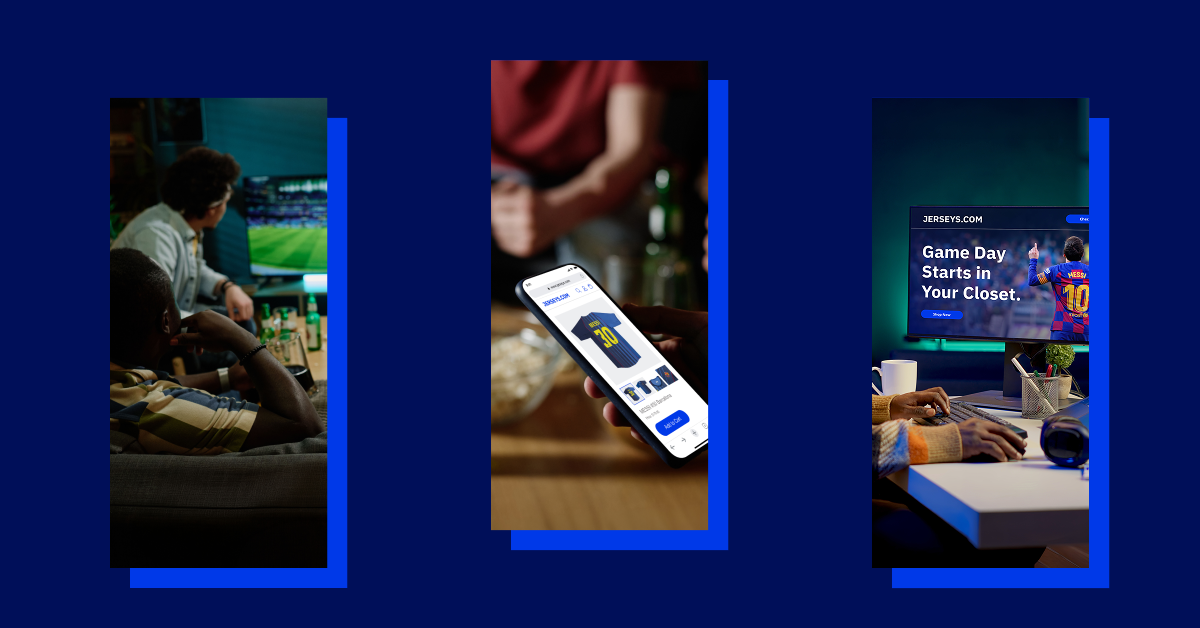
According to Nielsen, streaming now accounts for nearly half of total TV usage with live sports watched primarily on the TV screen—whether through traditional linear or connected TV. In fact, more than 35 billion hours of sports content are viewed on YouTube, now the most dominant streaming platform on US televisions. Combine this reality with eMarketer reporting that second-screen behavior has gone mainstream, it’s safe to say that today’s audiences move fluidly across screens. Which means your media strategy should too.
Today’s sports fans are always on, engaging with sports-related content during, before, and after games, across screens, channels, and platforms. Unified advertising strategies that span platforms and screens are the best way for marketers to reach and engage audiences during World Cup 2026. Understanding how to strategically leverage each at different points throughout the customer journey and the tournament will help you make your investments work harder and smarter.
Linear and CTV for reach and scale
Live matches provide major opportunities for marketers to capture attention in the moment. Linear TV delivers broad reach and is highly effective for brands with local appeal. With CTV, marketers can build on their linear reach with precision at scale engaging audiences with awareness-based messaging. However, linear and CTV inventory is limited and highly competitive, making it critical for marketers to reach and engage audiences across devices, platforms, and channels, during moments that matter.
Social media and second-screen viewing for holistic engagement
According to Nielsen, 31% of sports fans use a second screen to engage on social media while watching live events. That’s because today’s sports fans engage their communities across sports websites, community forums, and social media channels to discuss the games and major tournament moments. Social platforms like Meta and TikTok become particularly valuable during World Cup as audiences look to engage their communities. These platforms also provide a variety of formats, from video to in-app shopping ads, making it easier for brands to drive action.
Capitalize on exciting moments with YouTube
.jpg?width=1200&height=628&name=Blog%20Share_Making%20the%20Most%20of%20World%20Cup%202026_3.2%20(1).jpg)
YouTube users consume approximately 40 billion hours of sports content annually. This is unsurprising, as YouTube’s niche content library offers something for every type of fan. With YouTube, brands can reach audiences on content dedicated to match commentary, highlight reels, and tournament recaps that complement soccer and World Cup broadcasts. YouTube offers brands the opportunity to reach audiences and forge connections with content leading up to and after the games, transforming a 90-minute match into weeks of exposure and engagement.
Reach audiences out of home with DOOH:
Out-of-home moments matter, too. Brands can reach World Cup fans in high-traffic environments like shopping districts, in commuting or transit hubs, and around popular sports bars, extending World Cup messaging beyond the home.
Because DOOH allows brands to reach audiences with local precision, it becomes an especially strategic channel during the World Cup. By aligning messaging to the cultural makeup of specific markets, brands can tap into communities in ways that feel personal, relevant, and timely. While multicultural messaging can be delivered on personal devices, doing so at a community level mirrors how the World Cup is experienced and its emotional ties to national pride.
Eyes are on video, but don’t overlook audio:
Audio offers another powerful way to reach world up fans who love immersing themselves in team discussion and commentary. Audio helps brands reinforce messaging, drive recall, and reach audiences wherever they are.
Bringing it all together with a unified, predictive approach

Reaching audiences across fragmented channels and moments is one challenge. Knowing how to do it effectively is another.
That’s where a unified and predictive approach is critical. And it’s what Cadent is focused on today.
By bringing together all channels, platforms, and devices, in one unified, predictive platform, Cadent enables you to deliver a cohesive advertising experience. One that engages audiences in the moments that matter most, so your media works harder and smarter.
By layering on our Predictive Intelligence, we take things a step further. The Cadent Platform analyzes every impression across every screen, and billions of audience signals, so marketers can move from reactive planning to forecasting outcomes before spending a single dollar.
With a unified and predictive strategy, you can transform fragmentation into opportunity this World Cup season, reaching the right audiences, at the right moments, with greater precision and impact.
Because in a moment as dynamic as the World Cup, success isn’t just about being everywhere. It’s about being connected, coordinated, and intelligently aligned across every screen.
Learn how Cadent can get you in the game this World Cup season. Contact us today.