

Free Ad-Supported Streaming TV (FAST) has quietly played a significant role in the rise of streaming adoption, with more than 1.8 billion hours watched. Today, FAST delivers audiences comparable to major streaming platforms, with leading FAST services commanding meaningful shares of total TV viewing.
.png?width=1200&height=628&name=FAST_Blog_Image1.1%20(1).png)
At the same time, new technologies and creative formats have transformed CTV into more than just an awareness play. Today, advertisers can leverage the channel to drive measurable, full-funnel performance that takes audiences from awareness to conversion all from the comfort of their sofa.
As advertisers look to increasingly drive action with CTV and prove business impact, FAST has emerged as a powerful component to the CTV mix. Through FAST, advertisers can tap into massive reach and scale and balance cost—all while driving measurable performance.
In this blog post, we’ll explore FAST’s growth, what has contributed to its rapid adoption, and how advertisers can effectively capitalize on the channel.
What is FAST TV?
FAST provides audiences with free, ad-supported TV streaming and is available through Tubi, Roku, Pluto TV, Xumo Play, and Samsung TV Plus.
What makes FAST particularly unique is access to content similar to linear-style TV programming: content is scheduled rather than accessed on demand, and spans channels, genres, and even live content like sports and news.
Who watches FAST?
When asked about FAST’s audience, Cadent’s VP of Research, Rick Hogan set the record straight on who’s engaging with the channel.
“There was a common misconception in the industry that FAST audiences were too budget-minded to make investments in FAST inventory worthwhile,” he said. “The reality is that FAST inventory, when sourced directly and transparently, provides access to diverse, quality audiences. At Cadent, we’ve found that FAST and vMVPD audiences actually share similar characteristics and behaviors, with household incomes spanning $115,000 to $265,000, interests in lifestyle and entertainment content such as cooking, health, and sports, and are typically in market for a new automobile or home.”

FAST isn’t filler inventory. It offers advertisers access to real, engaged audiences at scale within a premium viewing environment that doesn’t break the bank. And the opportunity only continues to expand.
Approximately 131.4 million people in the US will watch FAST by the end of 2026, making up 54% of all CTV users, or 38.7% of the nation’s population. Amongst FAST platforms, adults aged 35 to 64 are increasingly turning to FAST—a demographic range that includes all of Gen X, today’s highest-spending generation.
What’s driving FAST adoption?
"No ads” may have once been the reason why viewers preferred subscription viewing. But as paid streaming services have grown, so has consumers subscription fatigue. Approximately 40% of Americans have cut back on streaming services since the start of 2026. What’s more, entry-level ad-free streaming prices increased 77% from 2020 to 2025, adding a hefty increase to an already growing list of subscription fees for most Americans.
Today’s audiences are increasingly opting for services that remove barriers between them and the content they want to watch. That’s one of FAST’s biggest draws: no subscription sign-ups, no monthly fees, no logins to manage, and less time spent figuring out what to watch.
Navigating FAST: What to consider
Savvy advertisers are expanding the CTV opportunity by combining paid ad-supported streaming, on-demand video, and FAST together to build a more holistic total video strategy. This approach balances effective cross-platform, cross-screen reach, cost efficiency, and performance-driven outcomes, but requires understanding the challenges and limitations that come with FAST.
Fragmentation:
FAST inventory is abundant, with more than 1,870 channels across various platforms and partners, and continues to grow. Because FAST inventory is distributed across so many publishers, apps, channels, SSPs, exchanges, and resellers, the same inventory can be accessed through multiple purchase paths, further complicating audience targeting and reducing media efficiency.
Lack of normalized metadata
Navigating the FAST ecosystem is further complicated by a lack of standardized metadata. Different publishers may list the same program differently. For example, one publisher may list a program as “Thriller-Horror,” another as “Crime,” and another as “Psychological.” A lack of normalization makes it difficult for advertisers to know what exactly they’re buying, measure performance, and properly optimize campaigns.
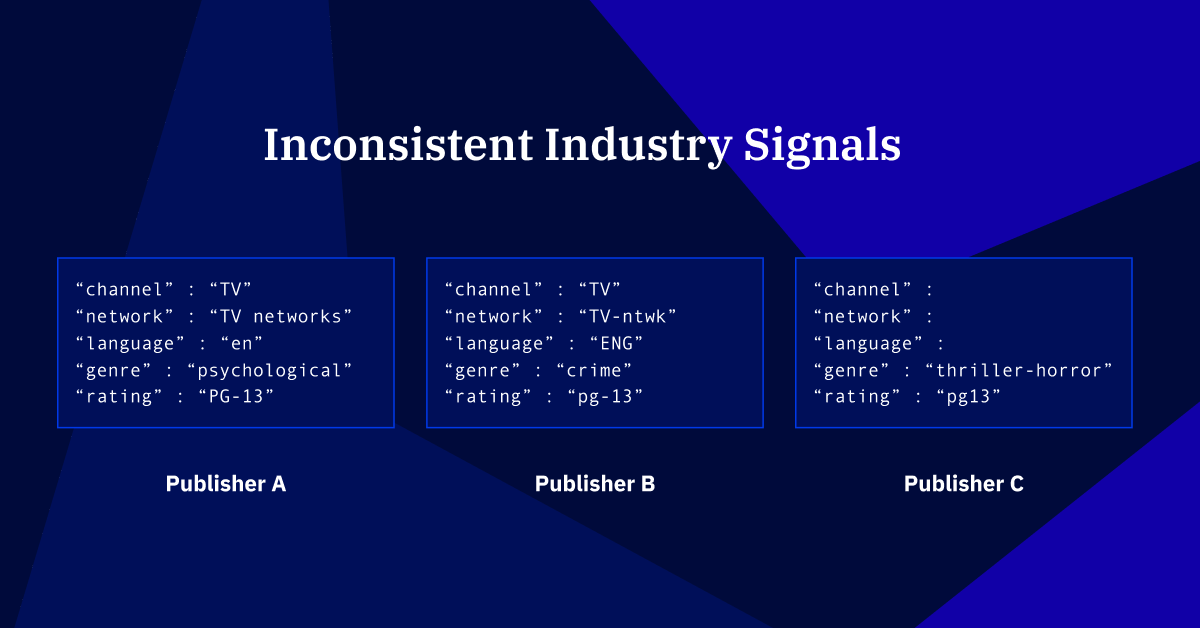
Transparency
Both fragmentation and a lack of normalized metadata can make it difficult for advertisers to know where their ads ran. This is especially true when advertisers purchase FAST inventory through indirect or unverified supply paths. Without sufficient inventory transparency, brands can struggle to evaluate inventory quality, cost efficiency, and brand suitability.
Frequency
A massive FAST ecosystem means that advertisers may access the same audiences and inventory across different buying and supply paths. This leaves marketers susceptible to repeatedly serving ads to the same audiences instead of driving incremental reach, diluting their media efficiency and performance.
Maximizing the value of FAST
To maximize the CTV opportunity with FAST, advertisers should shift away from fragmented, siloed media planning and buying. Instead, they should move toward a unified strategy that provides a cohesive view of their audiences across platforms, channels, and screens.
With a unified view of their media across the CTV ecosystem—including paid ad-supported streaming, AVOD, vMVPD, and FAST—advertisers can better orchestrate campaigns across channels, platforms, and devices. This enables advertisers to allocate and invest budgets more strategically to drive optimal campaign performance, deliver better ad experiences, reduce media waste, and save time.
Simplifying media planning and buying with Cadent
Cadent recognizes that the opportunity to engage audiences across CTV is massive, but navigating it can be tricky. That’s why we’ve built a unified predictive platform to make media planning, buying, and measurement simple across all media—including CTV and FAST—so you can invest with greater precision and more efficiently.
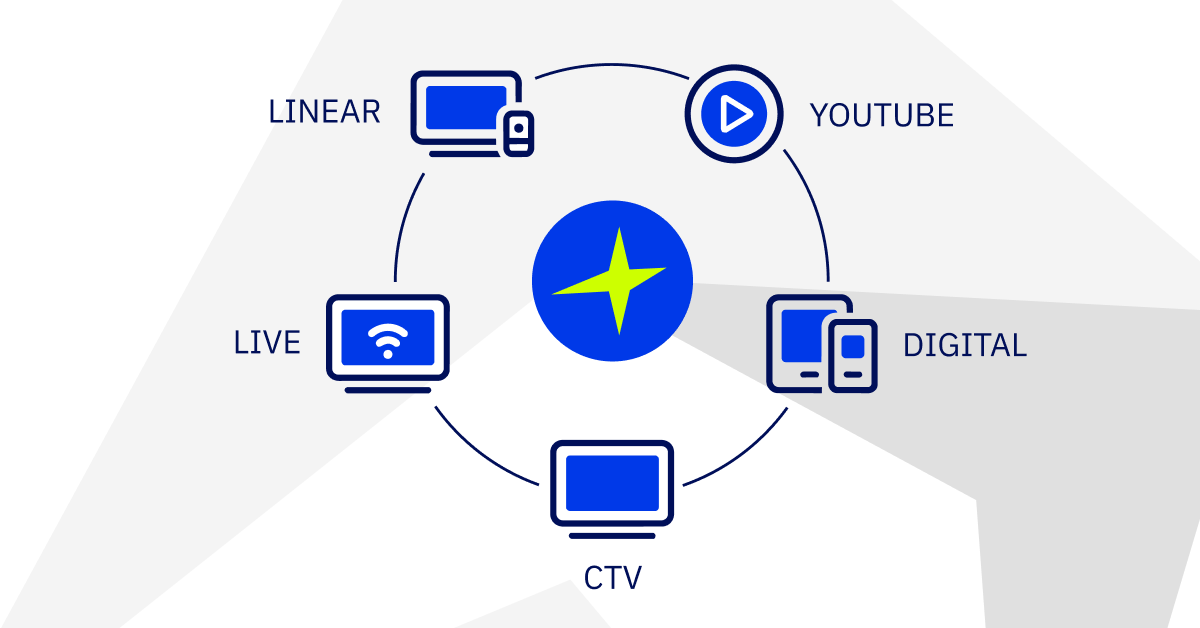
Here’s how we make it happen:
-
Connected audiences: Our proprietary Viewer Graph connects 125 million households,1.8 billion devices, 740 million home IP addresses, and 510 million hashed emails to create a unified audience view that helps advertisers achieve more effective reach, improve frequency management, and drive media efficiency.
-
100% Premium, direct CTV supply: The Cadent Platform operates direct CTV supply paths, with no duplication of supply and no auction manipulation, so advertisers always know they’re spending responsibly, avoiding unnecessary fees and fraudulent or brand-unsafe inventory placements.
-
Metadata standardization: Cadent normalizes all signals across more than 20 billion touchpoints, creating consistency across fragmented inventory sources and partners, for smarter targeting and better campaign outcomes.
-
Predict campaign performance before you invest: Our Predictive Intelligence scores 195 billion impressions daily based on their likelihood to drive a desired KPI, predicting campaign outcomes in real time before the bid, so advertisers reduce waste and improve efficiency.
-
End-to-end measurement: With Cadent’s Connected Outcomes, advertisers can unify measurement across all channels to track performance, optimize campaigns, and reduce media waste, all in real time.
The FAST Advantage is Smarter Decisioning
FAST’s scale and growing adoption have solidified it as a powerful channel for engaging audiences efficiently. But advertisers can’t afford to merely tack FAST onto existing media plans. To maximize its value, advertisers should strategically incorporate FAST into the broader video mix, including digital, linear, and YouTube to drive incremental reach and measure performance across audiences and inventory.
And as consumer attention continues to shift across screens, channels, and platforms, advertisers need to anticipate where audiences are moving and which impressions will drive outcomes. In a vast and complex FAST ecosystem, that makes smarter decisioning, greater transparency, and unified measurement increasingly critical.
Discover how Cadent can help you unify planning, buying, and measurement across today’s complex CTV ecosystem, including FAST, so you can anticipate viewer behavior and make smarter media decisions that drive performance. Download our one sheet to learn more.